
Learn how Playa Bowls supports franchise owners with site selection, training, marketing, technology, ongoing coaching, and resources designed to support multi-unit growth.
Learn how Playa Bowls uses social media, local marketing, PR, loyalty programs, and site selection to help franchise owners attract guests and build relationships in their local markets.
Not every franchise candidate is the right fit for every concept. This piece examines the profile of a successful Playa Bowls franchise owner, drawing on the brand's own candidate criteria and the real-world experience of operators who have scaled successfully within the system.
Running a Playa Bowls franchise looks different from most food service concepts. This piece walks through what a franchise owner actually does, from the structured pre-opening process through daily operations to the systems that support multi-unit expansion.
The superfruit bowl category has grown through economic uncertainty, a pandemic, and shifting consumer trends, and the data suggests that growth is structural rather than cyclical. This piece examines the market forces, behavioral drivers, and demographic tailwinds behind the category's long-term outlook.
Playa Bowls has built a franchise model around a differentiated product, a loyal guest base, and operations designed to scale. This piece examines what makes the business model structurally sound for multi-unit operators evaluating a long-term investment.
Playa Bowls has drawn coverage from Forbes, QSR, and the Washington Post on its way to more than 400 shops in just over a decade. This overview examines seven factors that help explain the brand's growth and what they mean for prospective franchise owners.
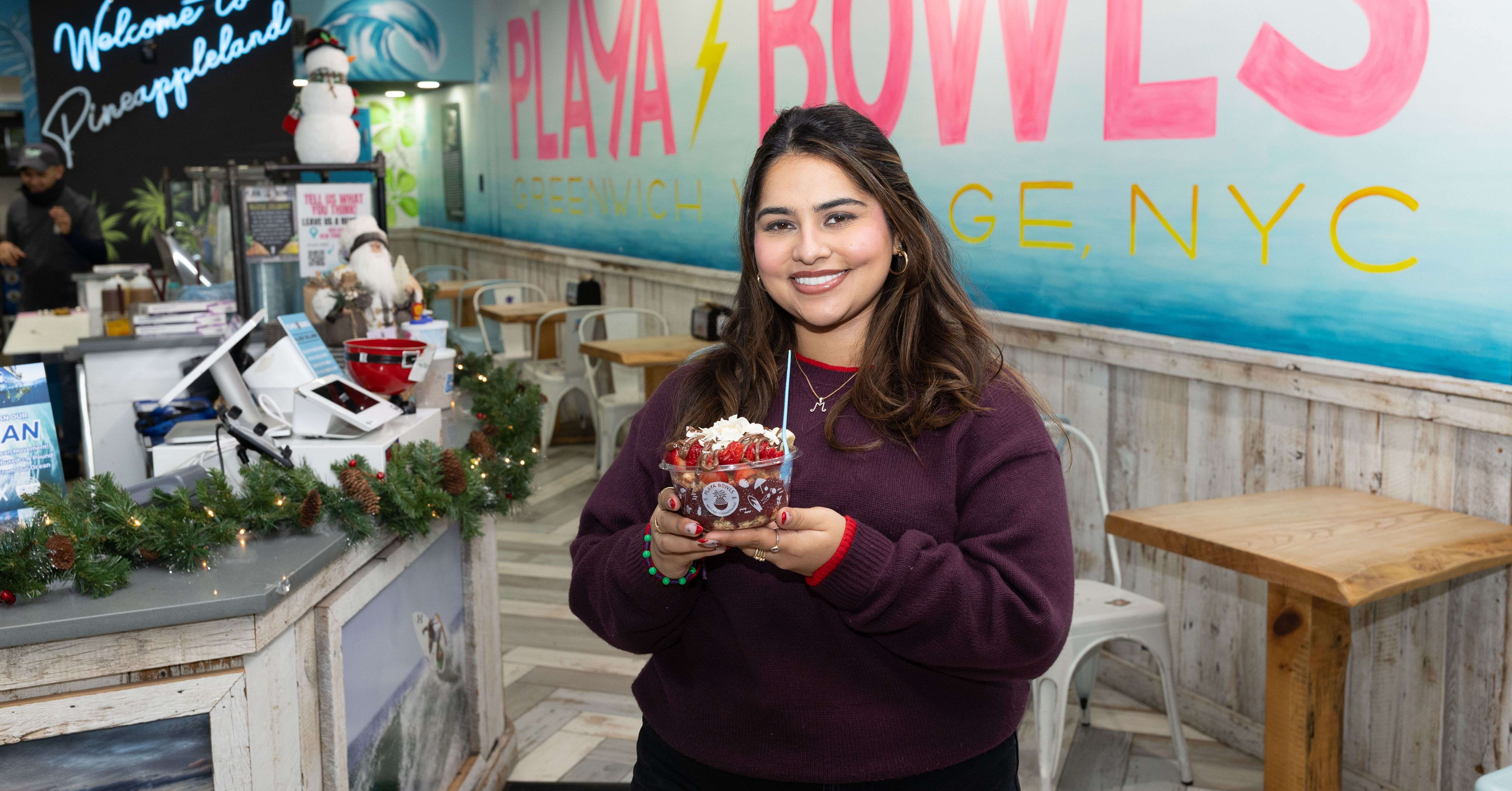
Misha Punwani opened her first Playa Bowls shop in Manhattan at 24 with no prior franchise experience. Through disciplined site selection, consistent operations, and a culture-first approach, she built a 16-shop portfolio across Manhattan, Brooklyn, and Long Island.
Portland offers a compelling environment for Playa Bowls franchise owners, combining a wellness-focused population, strong food culture, dense trade areas, and flexible real estate opportunities. Learn why the Portland market's demographics, consumer preferences, and growth potential make it an attractive location for disciplined franchise expansion.

The inside scoop
By signing up, you agree to our Privacy Policy